Key takeaways
Who must approve mobile detailing at an apartment or HOA?
Start with the lease, resident handbook, or HOA rules, then ask the property manager about your specific appointment. Rules may distinguish between washing a vehicle, interior-only cleaning, and commercial vendors working onsite. A neighbor having used a detailer previously does not establish permission for your building, parking area, or current management policy.
Request written approval when possible and describe the intended work, arrival window, equipment, and water-management plan. Some properties require a certificate of insurance, vendor registration, or a designated service area. Others prohibit vehicle washing altogether. In downtown Austin or communities near The Domain, controlled gates and shared garages can introduce additional requirements. Do not book first and assume the detailer can negotiate entry on arrival; a denied appointment may still be subject to the provider's cancellation terms.
What parking space does an apartment detailer need?
The technician needs more than a space that barely fits the car. Doors must open safely, equipment must stay out of traffic, and hoses must not create hazards across sidewalks. Ask the detailer how much clearance is needed and whether a nearby van space must be reserved. Never occupy a neighbor's assigned spot or an accessible access aisle to create working room.
Send photos of the parking area, garage entrance, overhead clearance signs, and nearby drains before confirming the appointment. Low ceilings, steep ramps, narrow turns, and restricted exits may prevent a service van from entering. A shaded outdoor space can be preferable to a tight garage, but tree debris and wind still matter. Fire lanes, emergency routes, and pedestrian paths must remain clear throughout the job, including when mats and tools are placed outside the vehicle.
Can a mobile detailer work without apartment water or power?
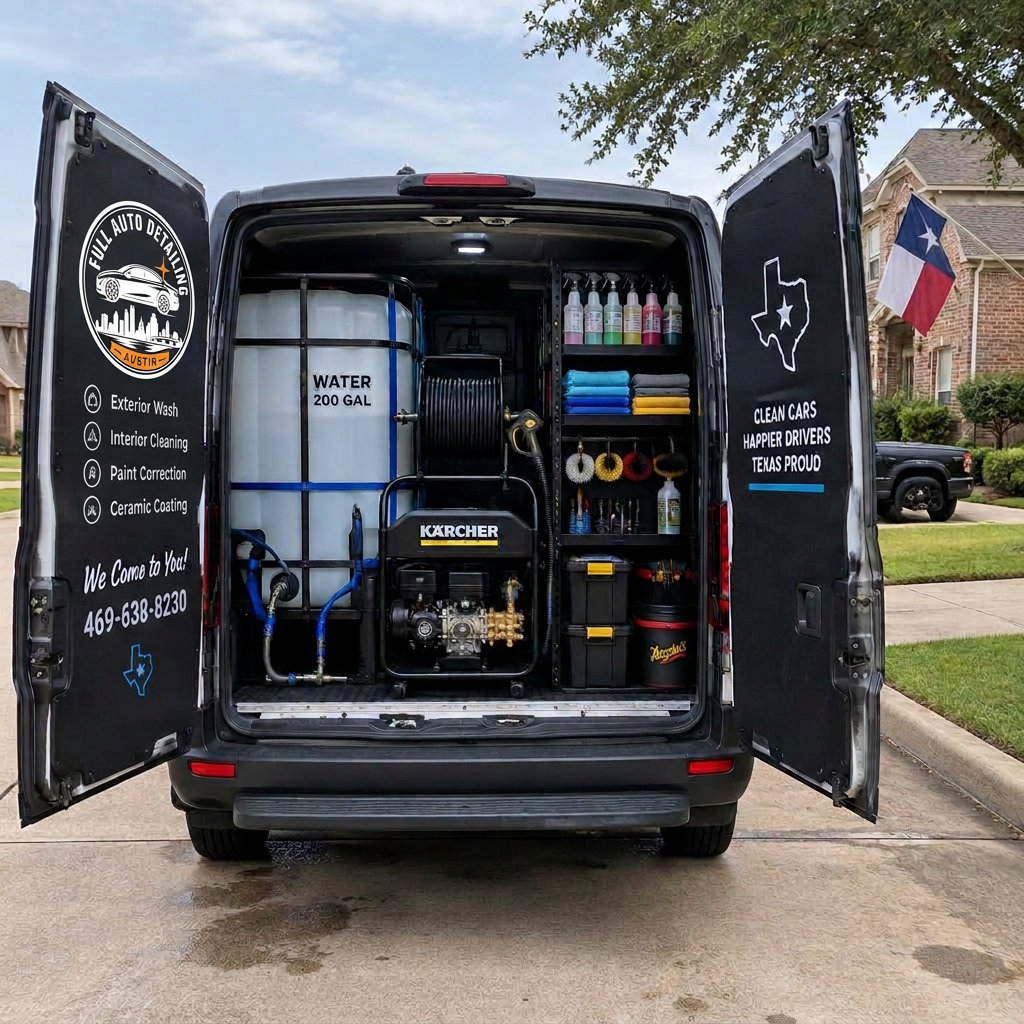
Some vans carry water tanks and onboard power; other operators need a faucet and grounded electrical outlet. Confirm the setup rather than assuming mobile means fully self-contained. Shared outlets and hose bibs belong to the property, so do not offer them without authorization. Extension cords should not cross busy walkways or be routed through doors where they could be damaged.
Ask about generator, vacuum, compressor, and extractor noise, especially near ground-floor apartments or home offices. Property quiet hours apply even when the business is open. Gasoline engines and generators must not run in enclosed or poorly ventilated garages because of carbon monoxide risk. If safe power is unavailable, ask whether a battery-powered interior service is feasible or choose another approved location. Reduced equipment access may change which services can actually be completed.
How should wash water be handled at an Austin property?
Plan for dirty water before anyone starts rinsing. Wash water can carry detergent, brake dust, oil residue, and road grime toward a storm drain. A storm drain is not a wastewater disposal point. Ask the provider how runoff will be contained, collected, and disposed of lawfully, and confirm current local requirements with the City of Austin Watershed Protection Department when the site plan is uncertain.
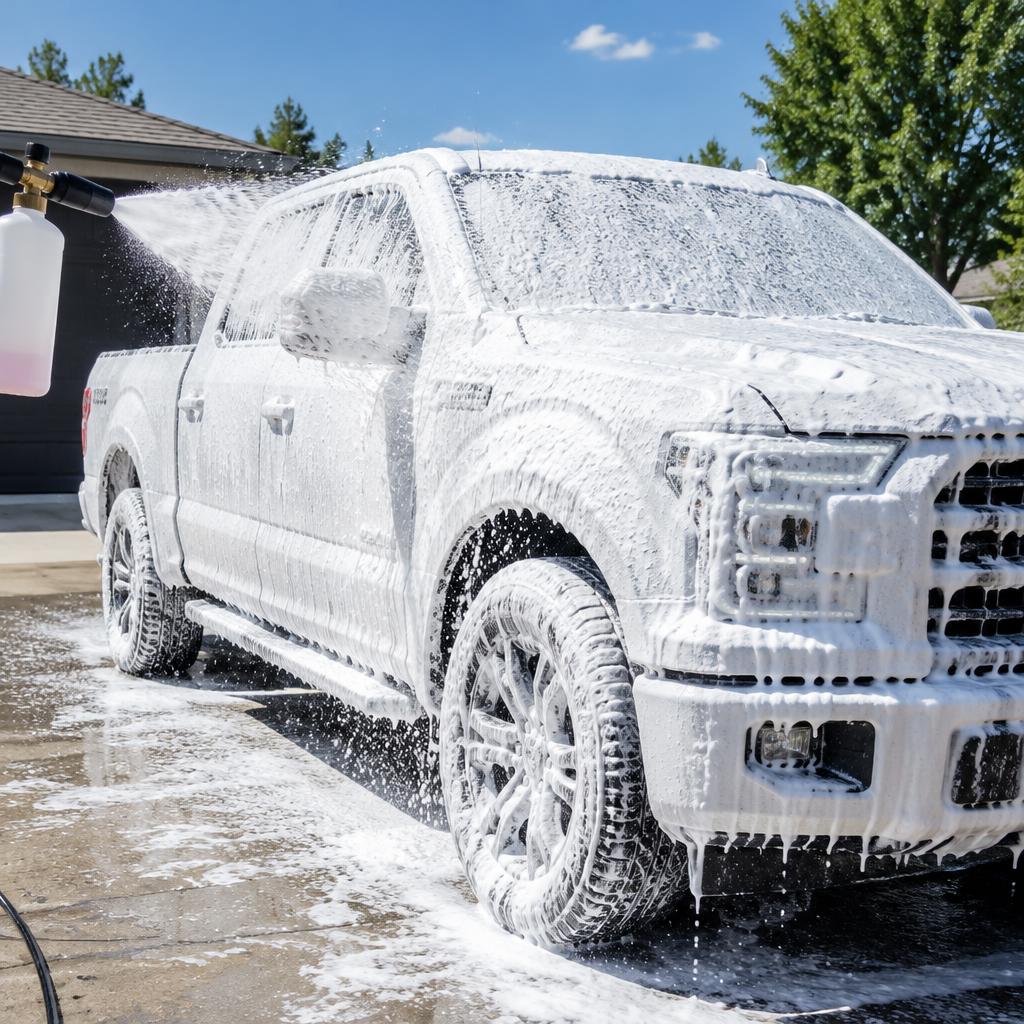
Rinseless washing may reduce water use for a suitable vehicle, but it does not automatically authorize work on private property or eliminate the need to manage residual liquid. Heavily muddy wheels or thick grit may need a different process and site. Do not assume that a biodegradable product makes storm-drain discharge acceptable. Also check current Austin Water restrictions if the service will use the property's water supply; rules and allowed uses can change with drought conditions.
What should you arrange before an apartment detailing visit?
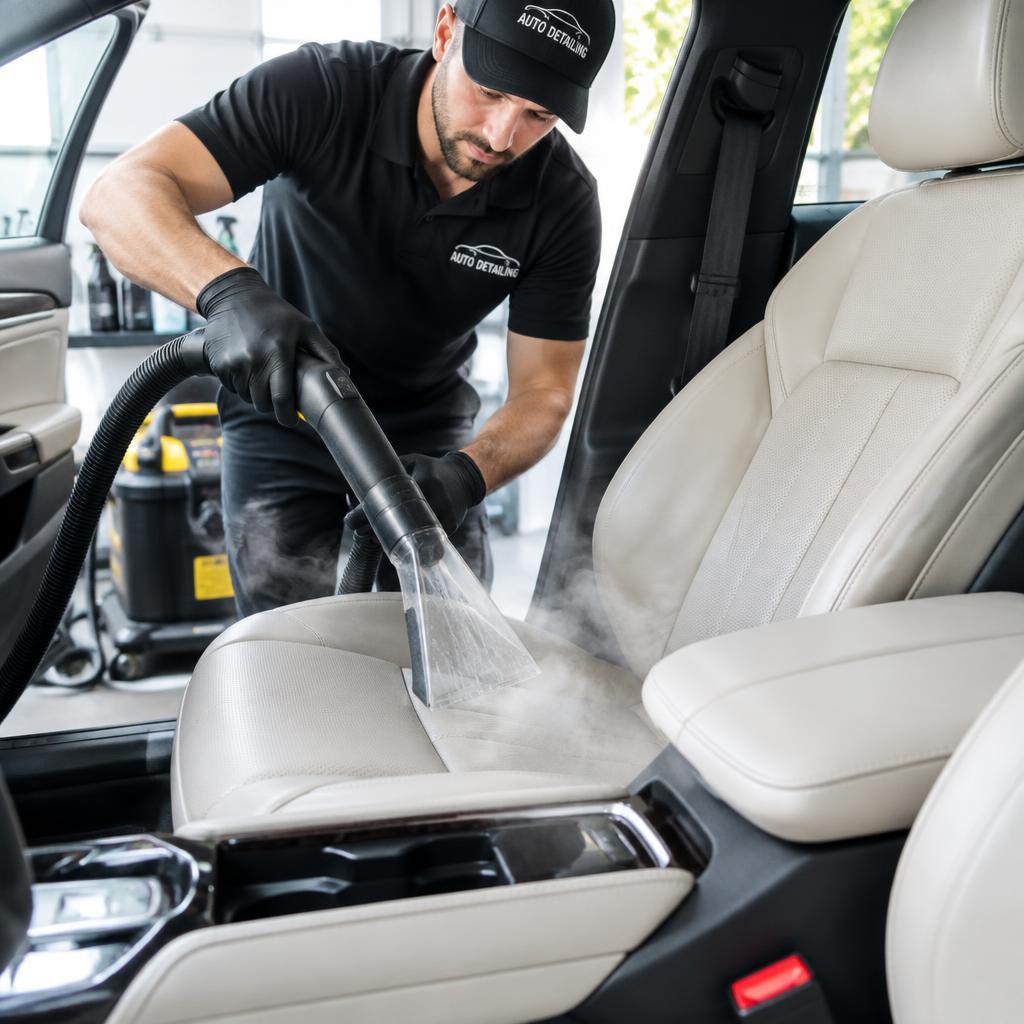
Give the provider the exact approved space, gate procedure, vehicle location, and a contact number. Arrange temporary vendor access through management rather than sharing credentials against property policy. Remove valuables and personal belongings, and agree on key handoff. For wet interior cleaning, ask about drying time before returning the car to a humid enclosed garage or immediately loading passengers.
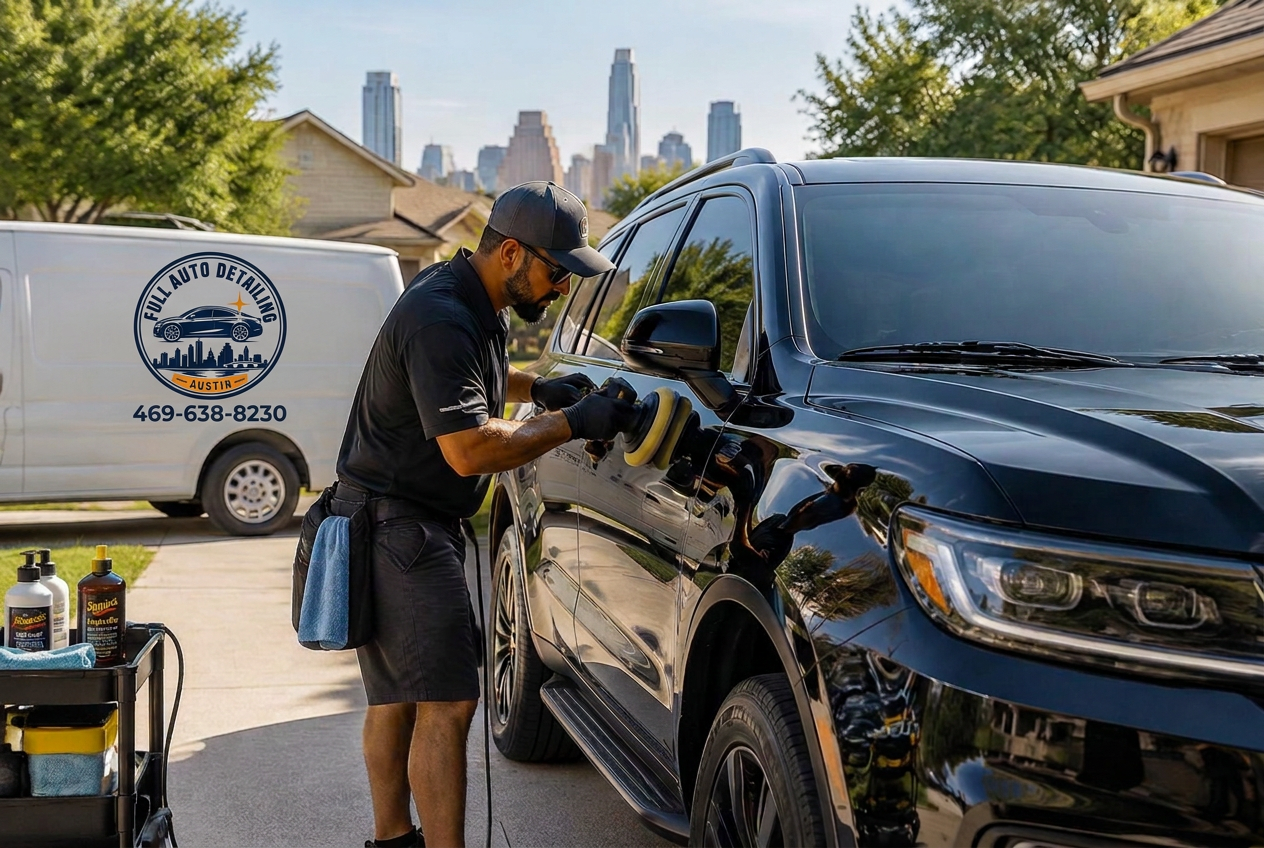
If permission is denied, ask about an approved office lot, a friend or family member's driveway with consent, or a shop-based appointment. Interior-only service may be an option, but still requires approval. Full Auto Detailing Austin can discuss location suitability at 469-638-8230, with booking hours of 8am–8pm daily. Keep a weather backup for thunderstorms and extreme heat; the alternative should be agreed in advance rather than moving equipment into an unsafe garage at the last minute.
- Written property permission and any vendor paperwork.
- Approved parking, safe access, and sufficient clearance.
- Confirmed utilities, noise limits, and runoff plan.
- A key handoff, drying plan, and weather alternative.
Frequently asked questions
Can my HOA prohibit mobile car washing?
Property rules may restrict washing or commercial activity. Review your governing documents and request clarification; a detailer's availability does not override those restrictions.
Is waterless detailing always allowed in a garage?
No. Management approval, ventilation, parking access, product suitability, and safety rules still apply even when little or no rinse water is used.
Can the detailer use the apartment's outdoor faucet?
Only with authorization. Confirm permission, access, and any current water-use restrictions before offering a shared faucet or outlet.
What if management only allows interior detailing?
Book an approved interior-only scope if the provider can work safely there. Arrange exterior work at another authorized location rather than adding it onsite.
Topics covered: Austin · The Domain · HOA · City of Austin Watershed Protection Department · Austin Water · carbon monoxide · Full Auto Detailing Austin