Key takeaways
What is the main difference between ceramic coating and PPF?
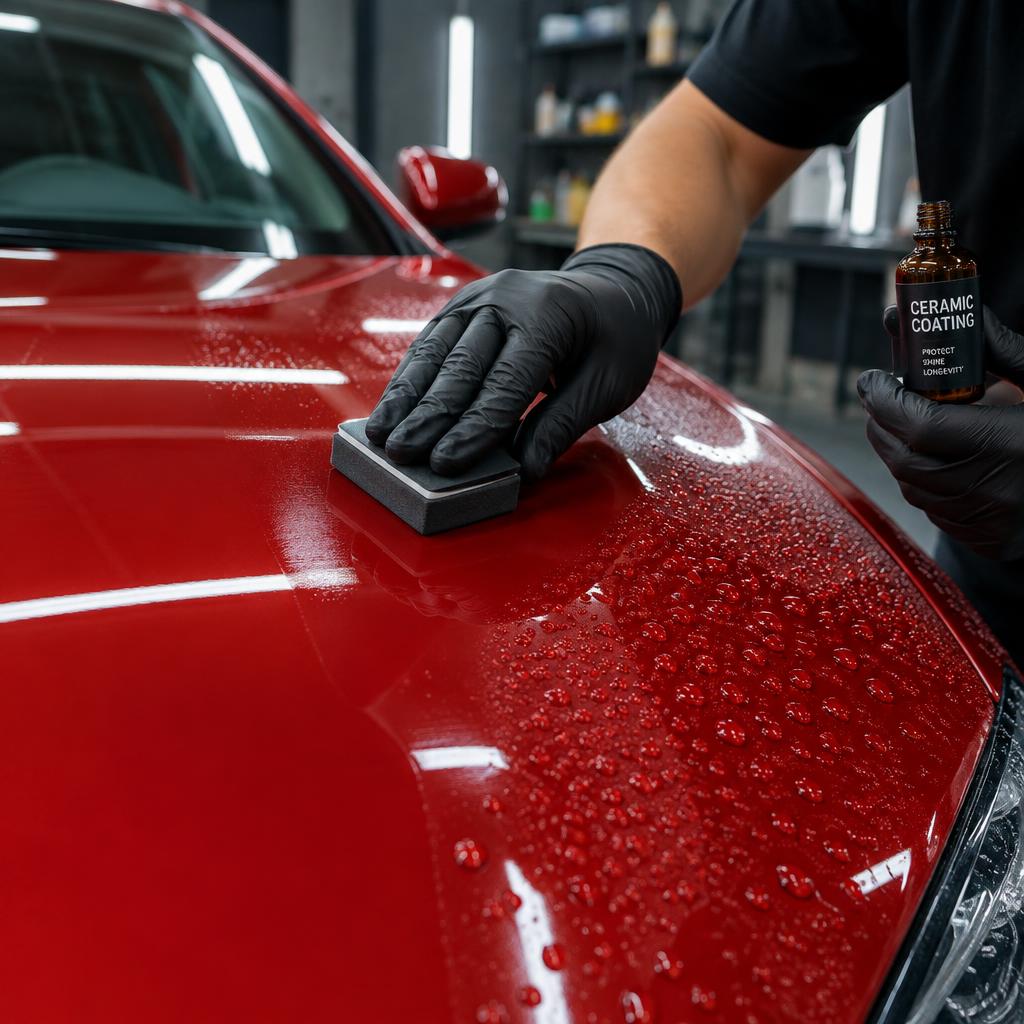
Ceramic coating is a liquid, SiO2-based product that cures into a thin, hard layer on top of clear coat. It improves gloss and hydrophobicity and resists UV, chemicals, and contaminants. Paint protection film is a clear, flexible urethane film applied in sheets, which provides thickness that absorbs impacts.
In short, coating protects the surface chemistry while film protects against physical damage. They are not substitutes, and comparing them is like comparing a good wax to a bumper guard. The right choice depends on what threatens your paint most.
When is paint protection film the better choice?
PPF is the better pick if you drive a lot on highways like I-35 or MoPac, where gravel and debris regularly strike the front end. Brands like XPEL and 3M offer films that resist chips and, in many cases, self-heal light scratches with heat from the sun or warm water.
It's popular on new or high-value vehicles, and on high-impact zones such as the hood, fenders, bumper, mirrors, and rocker panels. Film doesn't make paint invincible, and a severe impact can still get through, but it reduces damage significantly compared to bare paint.
- Rock chip and debris protection
- Self-healing on light swirls (premium films)
- Best for front-end and high-impact areas
- Can be removed, preserving factory paint if installed and removed correctly
When is ceramic coating the better choice?
Ceramic coating is ideal if you want deep gloss, easier cleaning, and defense against UV and chemical contaminants. Under Texas sun and with hard water from the Edwards Aquifer, a coated car is generally easier to wash and dries with less stuck-on grime.
It's also the more practical option for covering the whole vehicle at a lower cost than full-body film. Brands such as Gtechniq and CarPro are widely used in the industry. Remember that coating won't prevent chips or deep scratches.
How do cost, installation and upkeep compare?
PPF generally costs more, especially for full-vehicle coverage, because it requires precise cutting or pre-cut patterns and skilled installation. Ceramic coating costs vary by product and prep, but is typically less than full PPF. Both depend heavily on installer skill, so price isn't the only factor.
Both need proper prep: wash, decontamination, and often paint correction first. Maintenance for both involves gentle hand washing with pH-neutral shampoo. Film can yellow or peel if poorly installed or maintained, and coatings can wear and need refreshing.
Should I get both ceramic coating and PPF?
Many enthusiasts apply PPF to the front end and high-impact panels, and then ceramic coating over the whole car, including over the film. This gives physical protection where you need it and easy-clean gloss everywhere.
If budget is tight, choose based on your biggest risk. Highway commuters often start with front-end PPF; garage-kept weekend cars may prioritize coating. Call Full Auto Detailing Austin at 469-638-8230 to talk through options for your car.
Frequently asked questions
Which lasts longer, PPF or ceramic coating?
Both can last for years with proper care, and lifespan varies by product, installation, and maintenance.
Can I apply ceramic coating over PPF?
Yes, many installers do so for better cleaning and gloss.
Does PPF change the look of my car?
Quality film is nearly invisible, though some films can add a slight texture or edge visibility.
Is PPF worth it on an older car?
It can be if the paint is in good shape and you want to preserve it.
Do I need paint correction first?
Usually yes, because both products lock in whatever is on the surface.
Topics covered: XPEL · 3M · Gtechniq · CarPro · SiO2 · paint protection film · ceramic coating · I-35 · MoPac · Edwards Aquifer