Key takeaways
Why can cleaning make a car headliner sag?
A typical headliner is a layered assembly: decorative fabric, a thin foam layer, adhesive, and a formed backing board. Over time, foam can crumble and adhesive can weaken. Adding water or mechanical pressure to that aging structure may release fabric that previously appeared secure. Cleaning cannot rebuild deteriorated foam or restore a failing bond.
Austin vehicles parked outdoors endure repeated heating and cooling, making inspection important before cleaning. Look for bubbles, loose edges, hanging fabric around overhead lights, and powdery residue. Do not press or pull on suspicious spots. If the fabric is already separating, stop and consult an automotive upholstery specialist rather than attempting a wet cleaning or a household glue repair.
What products are safe for cleaning a car headliner?
Check the owner's manual and choose an automotive upholstery cleaner explicitly suitable for the material. Headliners may be woven fabric, vinyl, or specialty finishes such as Alcantara, and they do not all tolerate the same chemistry. Avoid bleach, strong degreasers, solvent-heavy spot removers, and improvised mixtures. Never combine cleaning chemicals.
Use clean, soft microfiber towels and, only if appropriate, an exceptionally soft brush for loose surface dust. A vacuum nozzle can snag loose fabric, so do not seal suction against the roof. Test cleaner on a discreet area, using the same minimal moisture planned for the visible stain. Let that spot dry fully before checking for discoloration, rings, texture changes, or looseness.
- Material-compatible automotive upholstery cleaner
- Several clean microfiber towels with no gritty residue
- Gentle lighting for inspecting stains and loose areas
- Ventilation and a shaded, weather-protected work area
How do you spot-clean a headliner without soaking it?
Begin by lifting loose dust with a gentle dry-towel pass, without dragging grit across the fabric. Apply a small amount of cleaner to the towel rather than spraying the roof. The towel should be barely damp, not dripping. Blot the affected area with light pressure, working carefully from the stain's outside edge toward its center.
Turn to a fresh towel face as soil transfers. Follow the cleaner's directions for residue removal, using another barely damp towel if required and then a dry towel to blot. Keep the treated area small and avoid repeated passes just because discoloration remains while wet. Wet fabric looks darker, so assess the result only after drying.
Keep liquid away from overhead consoles, microphones, interior lights, sunroof controls, and airbag-related trim. Do not remove pillars or electrical fittings to chase a stain. If grime covers most of the roof, a professional low-moisture assessment is safer than saturating the entire panel in an attempt to obtain one uniform finish.
How should you handle headliner water marks, grease and smoke?
Identify the source before choosing stronger treatment. A water ring near a sunroof or windshield may indicate a leak, blocked drain, or sealing issue. Cleaning the mark without repairing the entry point invites recurrence. Greasy fingerprints may respond to a compatible upholstery cleaner, but excess product can spread the oil and leave a larger ring.
Smoke residue is often distributed across the entire cabin, including the headliner, seat belts, carpets, and ventilation surfaces. Repeatedly wetting the roof will not solve contamination elsewhere. Fragrance sprays only mask odors, while concentrated deodorizer can stain delicate fabric. Ask about coordinated interior cleaning and odor assessment rather than expecting one overhead spot treatment to solve a whole-car problem.
Some dyes, old water marks, and degraded backing stains are permanent. Do not escalate to stiff brushes, direct steam, or hot-water extraction to chase an uncertain result. Accepting a faint stain can be preferable to detaching the fabric and needing a replacement headliner.
How do you dry a headliner safely in Central Texas?
Let gentle airflow dry the cabin in a shaded, secure location. Avoid heat guns, hair dryers, and an extractor pressed against the fabric. Do not assume a hot parking lot is controlled drying: strong heat can stress already aging materials, and closed windows can trap humidity. Keep windows open only when security and weather conditions permit.
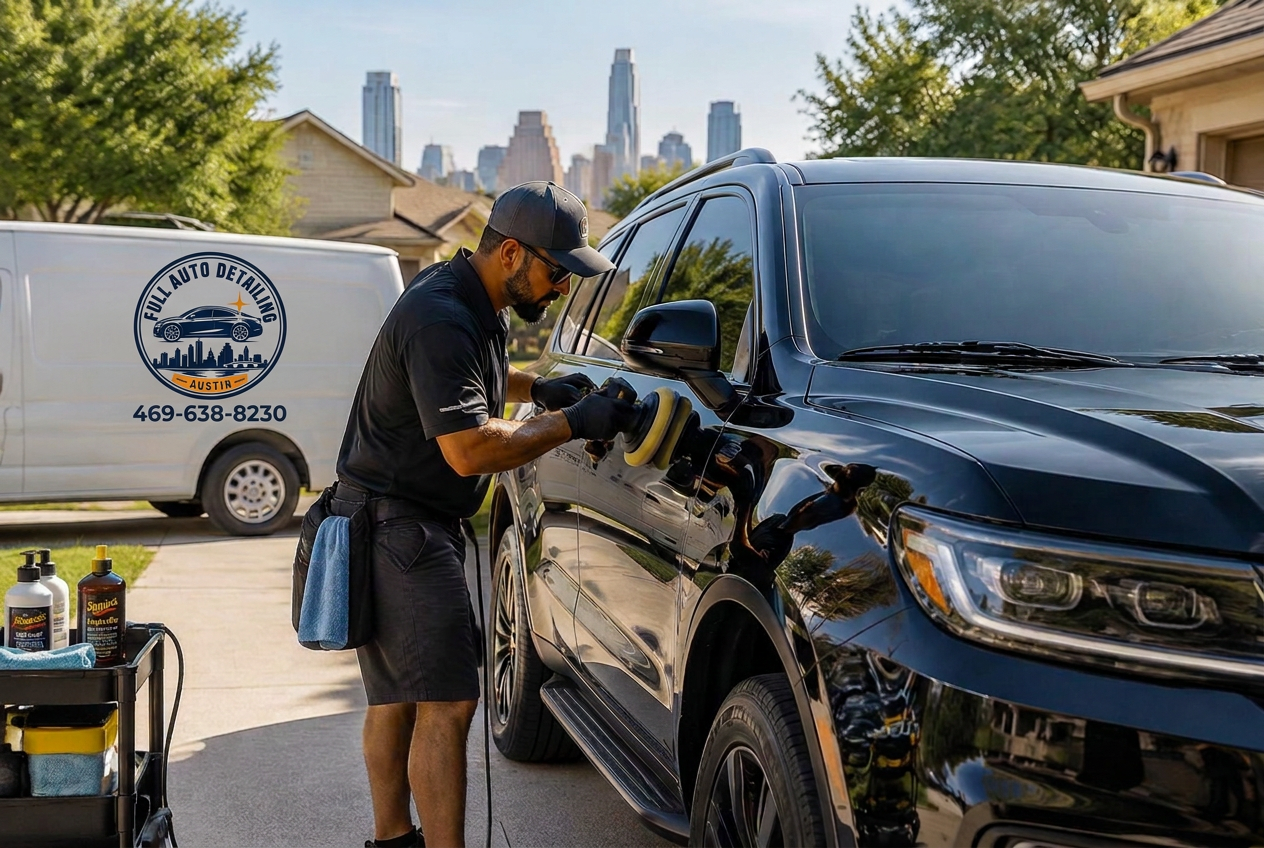
Check the fully dried area before repeating treatment, and stop if any edge lifts or texture changes. Address recurring dampness promptly, especially after Central Texas thunderstorms. Full Auto Detailing Austin has 10 years in business and can discuss conservative interior cleaning options and when upholstery repair is more appropriate. Call 469-638-8230; hours are 8am to 8pm daily. Mention existing sagging when arranging an assessment.
Frequently asked questions
Can I use a steam cleaner on my headliner?
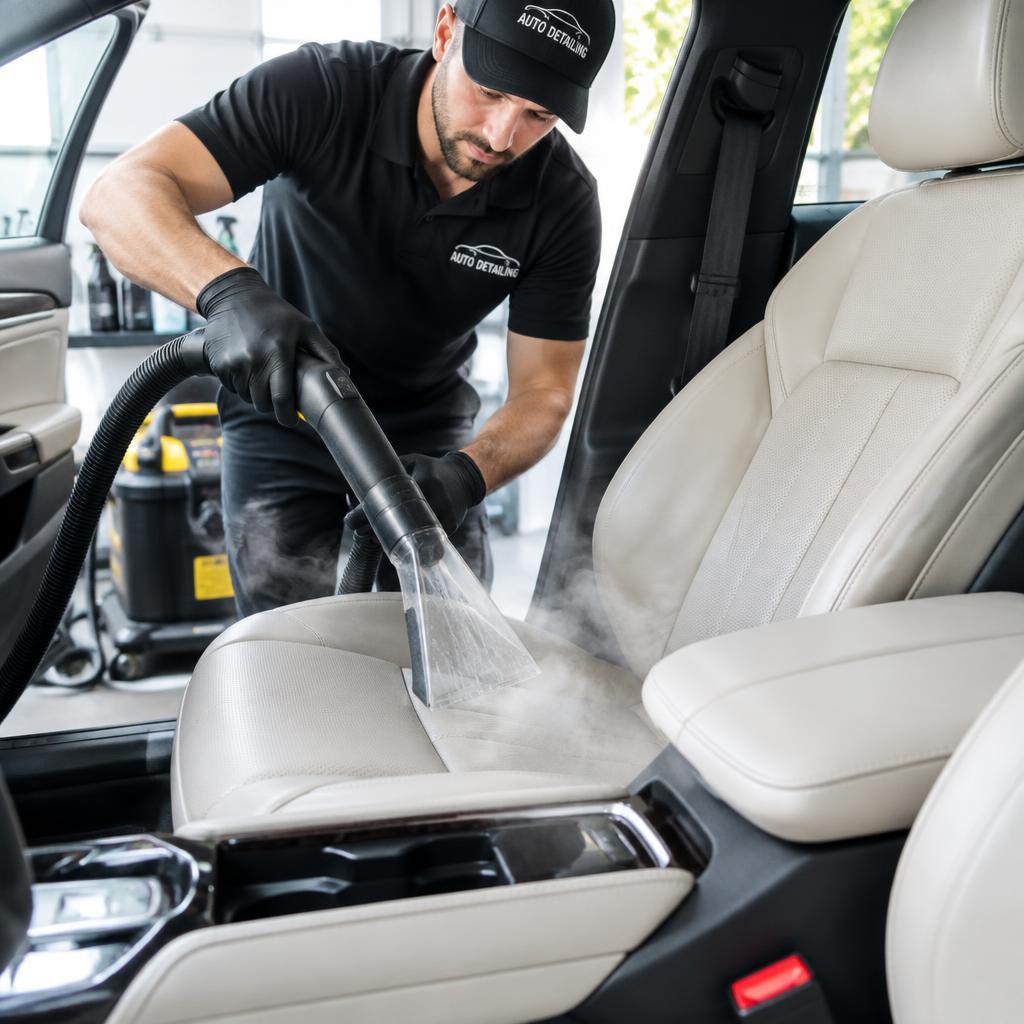
Direct steam is risky because heat and moisture can weaken foam and adhesive. A minimal-moisture approach is generally safer, especially on older headliners.
Can cleaning fix a sagging headliner?
No. Sagging usually indicates adhesive or foam failure. An upholstery professional can assess whether the fabric and backing need replacement.
Should I spray cleaner directly onto the roof fabric?
Usually no. Apply a compatible cleaner sparingly to a towel so you control moisture and avoid soaking hidden layers or overhead electronics.
Why did a ring appear after spot-cleaning?
A ring can result from uneven moisture, moved soil, or cleaner residue. Let the area dry and seek advice rather than expanding the wet patch repeatedly.
Topics covered: Full Auto Detailing Austin · Austin · Central Texas · Alcantara · microfiber · headliner foam · sunroof drains · automotive upholstery