Key takeaways
Why does smoke smell stay in a car after airing it out?
Tobacco smoke leaves particles and sticky residues on glass, plastics, upholstery, carpet, and concealed surfaces. Odor compounds also enter porous materials, including seat foam and headliner backing. Opening the windows exchanges cabin air but does not remove those reservoirs. The smell often returns when the car is closed again or its interior warms up.
In Austin, a car parked outside through a hot afternoon can reveal lingering odor that seemed absent during a cool morning inspection. Begin by identifying the history: occasional smoke exposure differs from years of smoking with the windows closed. Wildfire smoke intrusion, spilled ash, and an ashtray left in a console also require different levels of intervention. Do not promise complete removal before assessing the vehicle.
What should you clean first to remove tobacco residue?
Remove trash, cigarette butts, ash containers, loose mats, and personal items. Vacuum accessible carpet, seat seams, under-seat areas, and the trunk with appropriate attachments. Avoid blowing ash around the cabin with compressed air. Wear suitable protection for dirty work, ventilate the area, and use cleaning products according to their labels.
Wipe compatible hard surfaces with an automotive interior cleaner, rotating clean towels so residue is lifted rather than redistributed. Include the steering wheel, door handles, console, cupholders, accessible seat tracks, and door pockets. Treat screens, instrument lenses, and piano-black trim according to the manufacturer's guidance; strong chemicals or abrasive pads can cause permanent damage.
Clean the inside of the windows with an automotive glass cleaner and fresh towels. Smoke film can leave streaks that require more than one careful pass. Check that products are suitable for aftermarket window film. Do not saturate switches or spray liquids into dashboard vents and electrical controls while trying to reach hidden residue.
How do you remove smoke odor from seats, carpet and headliners?
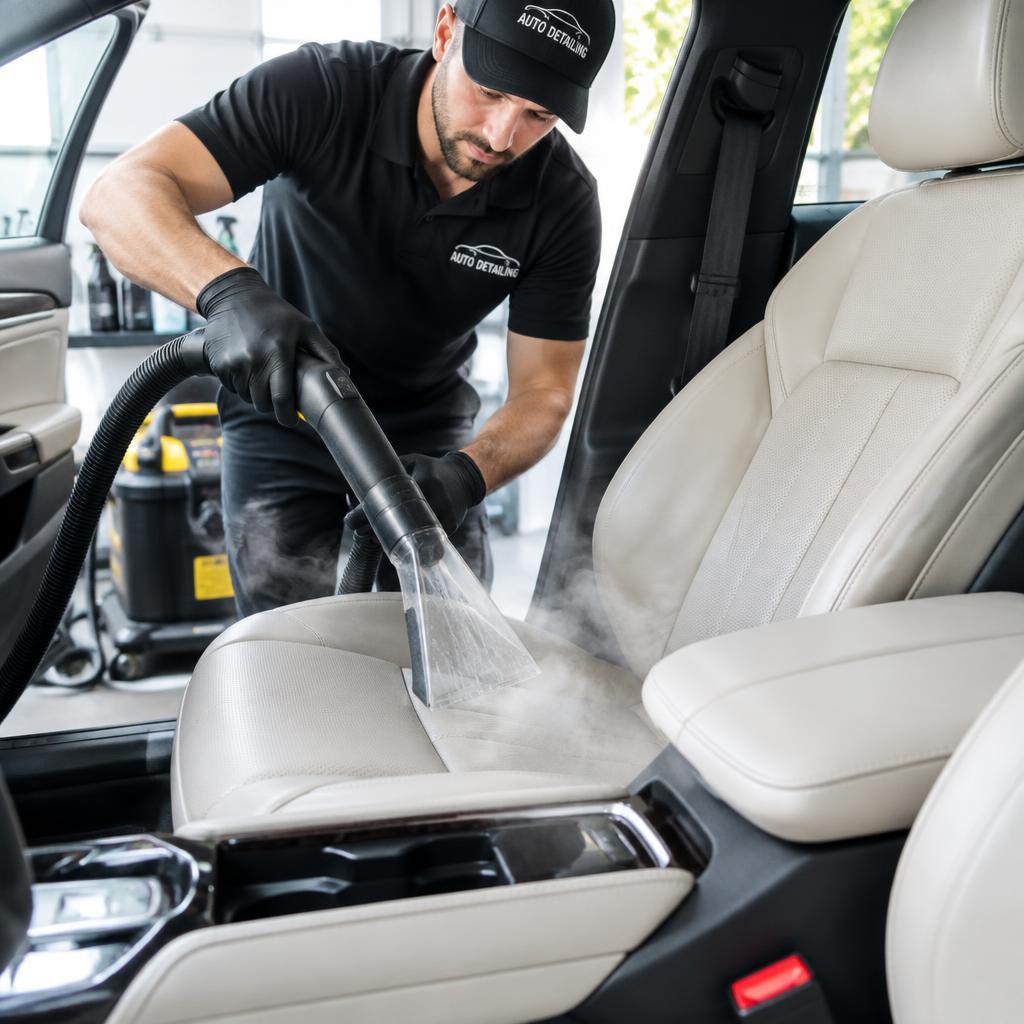
Use material-appropriate cleaning methods rather than treating every surface like carpet. Compatible cloth seats and carpets may benefit from controlled extraction, with sufficient recovery and drying. Excess water can move contamination deeper into foam, wet wiring, and create a second odor problem. Follow equipment and product directions, and avoid soaking seams or seat-mounted electronics.
Clean coated leather and vinyl gently with approved products; aggressive solvents and heavy scrubbing can damage their finish. Perforated seats require particular moisture control. Seat belts should be cleaned only as the vehicle manufacturer allows, without bleach or harsh chemicals that could damage the webbing. Leave safety-system disassembly to qualified personnel.
The headliner needs a low-moisture approach because heat, saturation, and force can cause sagging. Apply a tested cleaner to a towel and blot gently rather than steam-cleaning overhead fabric. Severe smoke contamination in foam or a fragile headliner may not be fully removable through detailing. Replacement can be the more realistic option when residues remain embedded.
Can the cabin air filter and air conditioning hold smoke odor?
Yes, a dirty cabin filter and contaminated ventilation surfaces can contribute to recurring odor. Inspect or replace the cabin filter according to the owner's manual, checking airflow direction and fit. An activated-carbon filter may help with some incoming odors, but it cannot clean contaminated seats or substitute for residue removal throughout the cabin.
Notice whether the smell appears with the blower off, on fresh-air mode, or on recirculation. That information helps separate a cabin source from a ventilation-related issue. Persistent odor from the HVAC system may need a technician's assessment and a manufacturer-compatible cleaning procedure. Do not pour cleaners into vents or assume a scented aerosol has reached the evaporator safely.
How do you know smoke odor treatment worked?
Allow cleaned materials to dry thoroughly with controlled airflow before judging the result. Check again after the car has been closed and warmed naturally, not immediately after applying a scented product. Remove temporary fragrances during assessment. Activated-carbon odor absorbers can be supplemental, but they do not remove sticky surface contamination or guarantee complete odor elimination.
Avoid DIY ozone treatments. Ozone is a lung irritant, and concentrations capable of treating odors can be unsafe; it can also affect sensitive materials. Never occupy a vehicle during an ozone treatment, and do not treat a timer or the absence of smell as proof that re-entry is safe. Source removal remains the priority, not gas treatment as a shortcut.
Full Auto Detailing Austin has 10 years in business and can discuss an interior-detailing and odor-removal plan based on exposure severity. Call 469-638-8230, 8am to 8pm daily. Describe how long smoking occurred and whether the odor changes with the air conditioning so expectations and any repair referrals are clear before booking.
Frequently asked questions
Will an air freshener remove cigarette smell?
No. It adds fragrance without removing the residue that produces the odor. The smell can return as the fragrance fades or the cabin heats up.
Does baking soda permanently remove car smoke odor?
It is not a reliable whole-car solution. Loose powder can lodge in seams and be difficult to remove, while smoke contamination remains on other surfaces.
Can one detail remove years of smoking?
Not always. Heavy contamination may require staged cleaning, filter replacement, and replacement of affected porous materials. Assess results only after full drying.
Will changing the cabin filter solve the smell?
It can help if the filter is contaminated, but it will not remove smoke residues from upholstery, carpet, glass, and trim.
Topics covered: Full Auto Detailing Austin · Austin · tobacco residue · activated carbon · cabin air filter · HVAC · ozone · headliner