
Key takeaways
Why do car odors return after air freshener wears off?
An air freshener changes what you smell without necessarily removing the material producing the odor. Food trapped in a seat track, pet urine in carpet padding, tobacco residue on trim, and water beneath a mat can continue releasing odor after a surface wipe. Heat makes many smells more noticeable, which is why a vehicle may seem acceptable in the morning and smell strongly after sitting through an Austin summer afternoon.
Begin with a systematic inspection instead of choosing a stronger fragrance. Empty storage pockets, lift removable mats, check the trunk and spare-tire area, and look beneath seats without disturbing wiring or restraint-system components. Note whether the odor changes when the air conditioning starts or after rain. That pattern helps separate cabin contamination from ventilation issues or water intrusion. If you smell fuel, burning electrical material, or exhaust, stop treating the problem as routine detailing and arrange an appropriate safety inspection.
How do you remove food spills and pet odors?
For a recent spill, remove solids and blot liquid without grinding it farther into fabric. Identify the upholstery material and test the cleaner in a discreet area. A suitable enzyme cleaner may help with certain organic residues, but it needs the correct application, contact time, and material compatibility. More chemical is not automatically better, and mixing cleaners can create hazards or leave residues that attract soil. Follow the product label rather than improvising a combination.
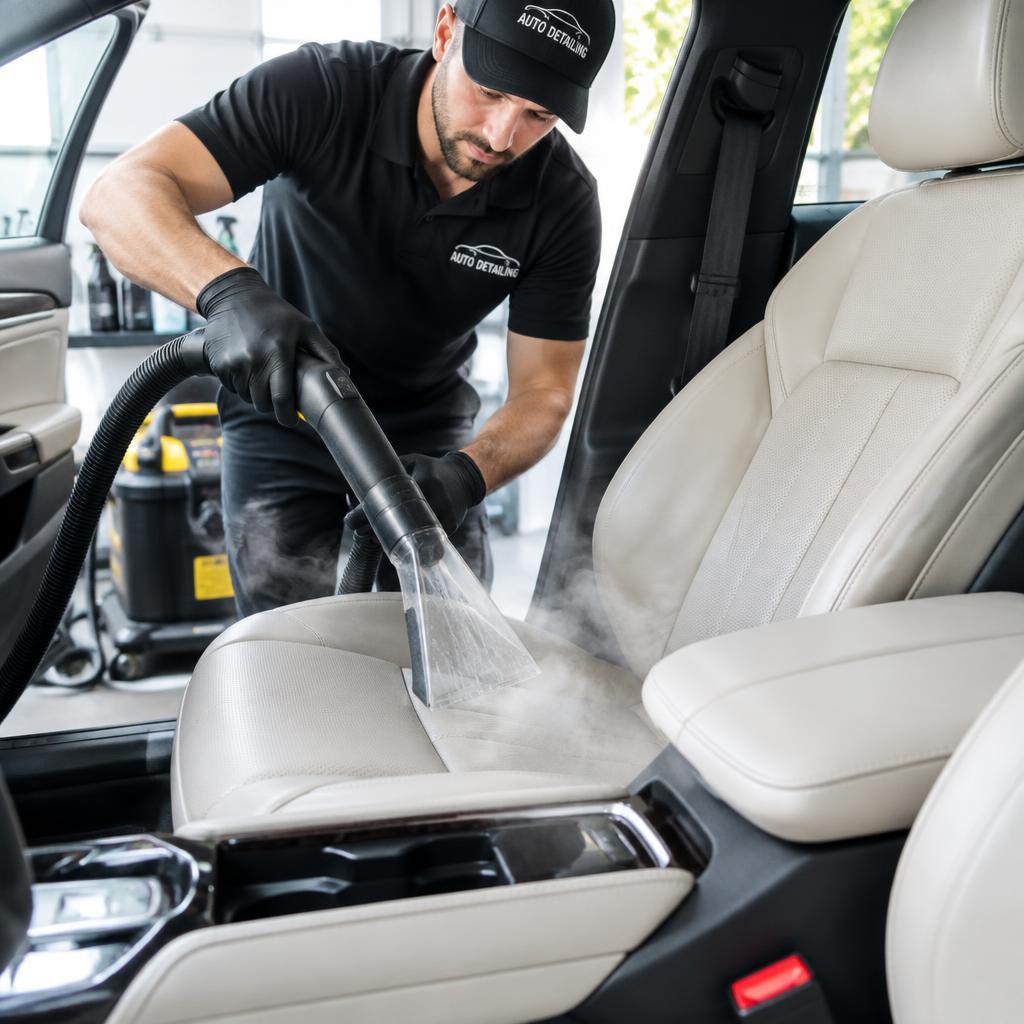
Pet hair removal matters because hair and dander can hold contamination in carpet and seat seams. Use suitable brushes, vacuum attachments, and gentle agitation without damaging delicate fabrics. Extraction may be appropriate for contaminated textile surfaces, but excess moisture can travel into padding that is difficult to dry. Urine reaching seat foam or under-carpet insulation may require access beyond a standard detail or replacement of affected material. A lasting result depends on reaching the source, not merely improving the visible surface.
What does it take to remove cigarette smoke odor?
Smoke residue can settle on glass, plastics, upholstery, headliners, and ventilation components. Cleaning only the seats leaves many reservoirs untreated. A thorough plan may include careful vacuuming, compatible hard-surface cleaning, upholstery treatment, interior glass cleaning, and evaluation of the cabin air filter. The headliner needs special restraint because excessive moisture, heat, or aggressive rubbing can weaken adhesive and damage its backing. Do not saturate it in an attempt to accelerate odor removal.
Results depend on how long and how heavily the vehicle was exposed. A single event differs from years of smoking with the windows closed, and some porous materials may remain affected despite extensive cleaning. Ask what surfaces are included and whether repeat inspection or specialist work may be necessary. Deodorizing equipment can sometimes support a source-removal process, but it should not be presented as a guaranteed shortcut that cleans tar, residue, or hidden deposits without physically addressing them.
How do you fix musty smells and wet carpet?
A musty odor calls for a moisture investigation. Check for damp carpet, water in the trunk, clogged drainage paths, weather-seal issues, and possible HVAC condensate problems. Cleaning the cabin without fixing an active leak allows the same conditions to return. Flood exposure is especially important to disclose because water can affect wiring, insulation, restraint components, and hidden cavities. Such a vehicle may need mechanical inspection and specialist remediation rather than an ordinary interior detail.
Drying must reach the affected layers, not just the fabric you can touch. Carpet backing and insulation may stay wet after the top feels dry, so access and controlled airflow may be necessary. The EPA emphasizes correcting moisture sources when addressing mold problems; a scented spray is not a repair. Extensive visible growth, recurring dampness, or health concerns warrant qualified assessment. Avoid claiming that an interior detail sterilizes the vehicle or guarantees removal of every biological contaminant.
- Find and repair the leak before final deodorizing.
- Inspect padding and hidden storage areas for retained moisture.
- Use specialist help for extensive growth or flood-related contamination.
Can the air conditioning system cause car odors?
If the smell appears mainly when the fan starts, inspect the cabin air filter and consider the HVAC system. Leaves, debris, moisture around the evaporator, or an obstructed drain can contribute to odor. Replacing a dirty filter may help, but it does not automatically clean the evaporator or fix drainage. Follow the vehicle manufacturer's service guidance, and have a qualified technician assess components that cannot be reached safely during normal interior detailing.
Be cautious with ozone or other aggressive deodorizing treatments. Ozone is a respiratory irritant, and it should not be used in an occupied vehicle or treated as harmless because the smell later disappears. Any specialist treatment requires product and equipment instructions, exposure controls, ventilation, and consideration of material compatibility. It also does not remove the physical contamination that caused the problem. Ask how the source is being cleaned, what safety precautions apply, and how the vehicle will be evaluated before normal use resumes.
How can you keep car odors from coming back?
Keep the cabin dry, remove food promptly, vacuum regularly, and clean reusable pet blankets or child-related accessories according to their manufacturers' instructions. Do not soak child safety-seat harnesses or other safety equipment with detailing chemicals. Investigate new moisture quickly after storms, especially if the smell returns after rain. Once the original source is corrected, simple maintenance usually becomes more effective because it is no longer competing with hidden contamination that keeps replenishing the odor.
Before booking, describe the smell, when it began, any spills, smoking history, pets, and known leaks. Photos of affected areas can help establish whether ordinary cleaning is appropriate or whether additional repair access is needed. Full Auto Detailing Austin has been in business for 10 years and is open 8am–8pm daily. Call 469-638-8230 to discuss odor-removal and interior-detailing options, with realistic expectations about access, drying time, and situations that require upholstery or mechanical specialists.
Frequently asked questions
Can every car odor be removed permanently?
Not by detailing alone. Permanent improvement depends on eliminating the source; leaks, damaged foam, or mechanical problems may require repair or replacement.
Does baking soda fix a soaked seat?
It may absorb some surface odor, but it does not reliably clean contamination deep in foam and can leave difficult residue.
Is ozone safe around people or pets?
No one should occupy a vehicle during ozone treatment. Ozone is a respiratory irritant and requires controlled procedures and ventilation.
Why does my car smell worse after rain?
Moisture may be entering or reactivating existing contamination. Inspect for leaks, damp padding, and drainage problems instead of adding fragrance.
Topics covered: Austin · EPA · HVAC · cabin air filter · enzyme cleaner · ozone · carpet padding