Key takeaways
What kind of leather or synthetic upholstery is in your car?
Start with the owner's manual and the vehicle's upholstery specification. A seat described as leather may combine coated leather seating surfaces with synthetic bolsters or trim. Other vehicles use fully synthetic upholstery, while some premium interiors include more absorbent leather with different care requirements. Perforated sections add another complication because liquid can pass through small openings. The right product must suit the actual material, not simply the marketing name used for the interior package.
Many modern automotive leathers have a pigmented, protective finish. Cleaning primarily addresses that surface coating and the oils, dust, and dye transfer resting on it. Heavy conditioners or household oils may leave residue without delivering the benefit an owner expects, and some can change feel or appearance. Test any unfamiliar product in a discreet area and follow the manufacturer guidance. If you cannot confidently identify the material, a conservative cleaning assessment is safer than saturating an entire seat with a leather-labeled product.
Why is Texas heat hard on leather seats?
A vehicle parked outside in Austin can develop a very hot cabin, and direct sunlight adds exposure to seat surfaces and adjacent trim. Heat, repeated use, body oils, abrasive grit, and neglected spills work together; not every crack is caused solely by dryness. Sliding across a dirty bolster can wear its finish, while lotions and sweat can accumulate where skin repeatedly touches the upholstery. Reducing contamination is therefore part of protecting the material from everyday wear.
Covered parking, a suitable windshield shade, and legal window treatments can reduce aspects of exposure, although they do not eliminate the need for cleaning. Follow Texas rules when considering window tint and verify current requirements with a qualified installer. Avoid treating conditioner as a substitute for shade or expecting it to reverse material breakdown. If a seat is already peeling or losing its coating, more product can obscure the issue temporarily without repairing the underlying finish or structure.
How should you clean leather car seats safely?
Let the interior cool, then vacuum loose debris with an attachment that will not scratch the surface. Pay attention to seams and creases where grit collects, but avoid forcing tools into stitching or wiring areas. Apply a compatible cleaner to a microfiber towel or appropriate soft tool rather than flooding the seat. Work in manageable sections with light agitation, remove loosened soil, and leave the material clean without a sticky residue. Stop if color transfers unexpectedly or the finish changes.
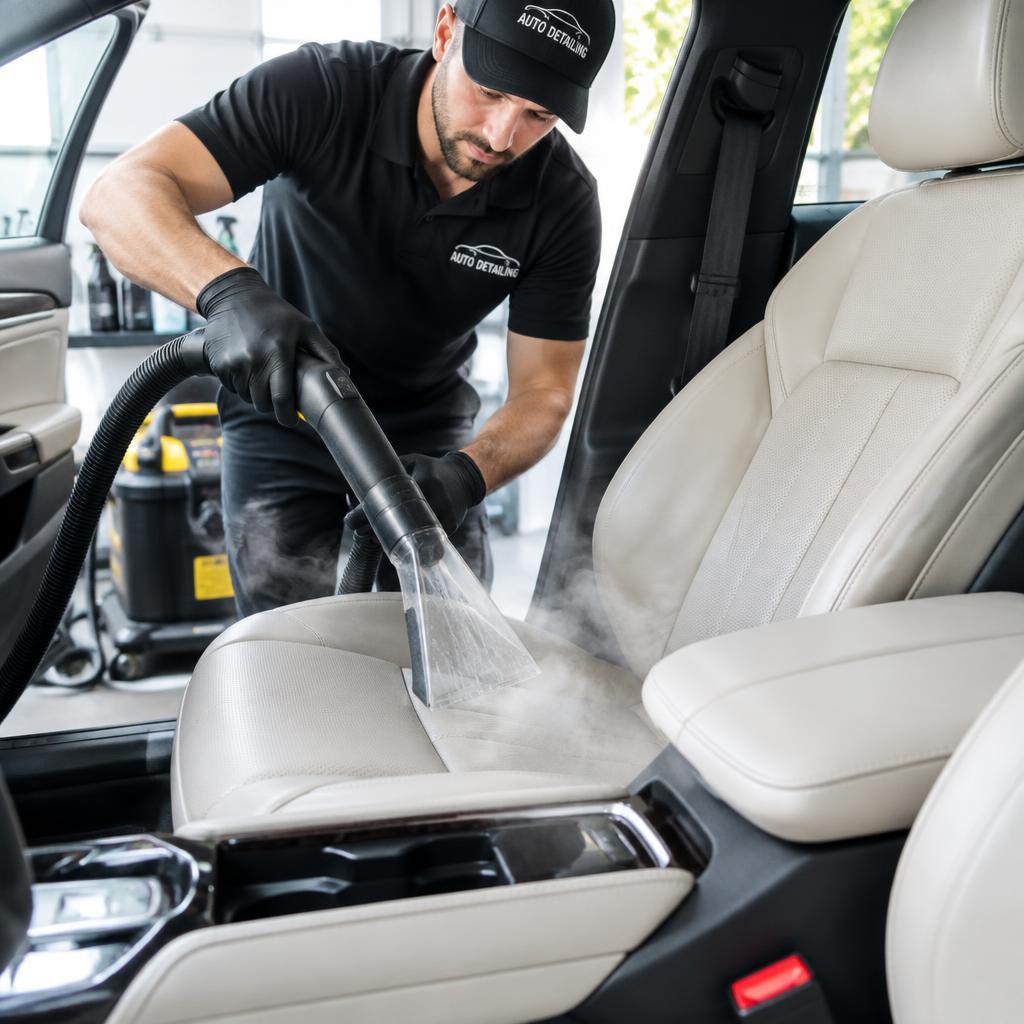
Perforated seats and ventilated cushions need particular moisture control. Excess liquid can enter foam or affect components below the surface, so do not pour cleaner directly into openings. Steam also needs caution: concentrated heat and moisture can damage finishes, adhesives, or nearby electronics when misused. Household dish detergents, abrasive pads, and melamine foam are poor default choices for delicate upholstery. A test area and modest cleaning method are preferable to aggressive scrubbing that makes a stain less visible by wearing away the finish.
- Vacuum grit before applying cleaner.
- Use a material-compatible product and a discreet test spot.
- Keep perforations, seams, and controls from becoming saturated.
Do modern leather seats need conditioner?
Conditioner is not automatically required for every modern seat. Coated automotive leather often benefits most from routine cleaning and, where approved, a compatible protective treatment that does not leave a slippery or glossy film. More absorbent leathers may have different needs, so consult the vehicle and product instructions. A product from a detailing brand such as Koch-Chemie should still be matched to the surface and dilution guidance; a recognized name does not make every formula suitable for every material.
Avoid judging success by a shiny appearance. Many factory interiors are intended to look relatively matte, and shine can come from body oils or product buildup. Heavy dressing can transfer to clothing, trap dirt, or make seating surfaces unpleasantly slick. Do not apply slippery products to pedals, steering-wheel grips, or controls. If you choose a protection product, apply only as directed and remove excess. Care should preserve the intended finish rather than changing its texture to create an artificial impression of nourishment.
How do you handle sunscreen, denim transfer, and spills?
Treat fresh spills promptly by lifting solids and blotting liquid rather than rubbing it deeper into seams. Sunscreen, body lotion, and food oils can leave residues that become harder to remove over time. Denim transfer may respond to a suitable cleaner when addressed early, but deeply set dye can require specialist treatment. Repeatedly escalating to stronger solvents risks removing the seat's own color or topcoat, especially on pale upholstery where changes are easy to see.
Keep expectations realistic around existing wear. Cracked bolsters, exposed material, tears, and peeling synthetic surfaces are not ordinary cleaning problems. A detail can improve cleanliness around damage, but recoloring, upholstery repair, or replacement may be needed for restoration. If a spill reaches foam or produces a persistent smell, disclose it before booking so cleaning and drying can be planned correctly. Do not cover the issue with fragrance or a heavy dressing that complicates later diagnosis and repair.
How often should Austin drivers maintain leather seats?
Inspect high-contact areas regularly and wipe fresh contamination before it becomes embedded. A gentle cleaning interval of roughly monthly can be a useful starting point for a daily driver, but actual need depends on use, climate exposure, and the upholstery instructions. Seats carrying children, pets, gym clothing, or work gear may need targeted attention sooner. Deep cleaning should be condition-based rather than an excuse to repeatedly saturate or scrub otherwise clean material at every appointment.
Use clean towels, avoid storing oily products against seats, and inspect seams and bolsters for early wear. Tell your detailer about previous repairs, aftermarket coatings, heated or ventilated seats, and any unusual staining. Full Auto Detailing Austin has been in business for 10 years and is open 8am–8pm daily. Call 469-638-8230 to discuss interior-detailing options and material-safe care. A useful appointment should identify what can be cleaned, what needs gentle maintenance, and what may require a qualified upholstery repair specialist.
Frequently asked questions
Can conditioner repair cracked leather?
No. It cannot rebuild a cracked coating, torn material, or failed seam. Those conditions may need upholstery repair or replacement.
Are baby wipes safe for leather seats?
Not as a universal recommendation. Ingredients and residues vary; use a product approved for your particular upholstery instead.
Can you steam-clean perforated leather?
Heat and moisture can create risks. Use only methods appropriate for the seat construction and manufacturer guidance, with careful moisture control.
Why do my leather seats look shiny?
Body oils, wear, and product buildup can create shine. Gentle cleaning may restore the intended appearance if the finish itself is still sound.
Topics covered: Austin · Texas · coated leather · synthetic upholstery · microfiber · Koch-Chemie · perforated leather