Key takeaways
What causes hard water spots on car paint?
Hard water carries dissolved minerals such as calcium and magnesium. When droplets sit on a hot panel and evaporate, the water leaves the minerals behind as white rings or dots. Austin's water, drawn partly from the Edwards Aquifer region, and the sprinklers common on driveways make this a regular problem.
Triple-digit Texas heat speeds evaporation, so spots form faster than in cooler climates. If left, mineral deposits can bond to the surface and the acidic components can etch into the clear coat, leaving a permanent mark that no wash can remove.
What is the gentlest way to remove water spots?
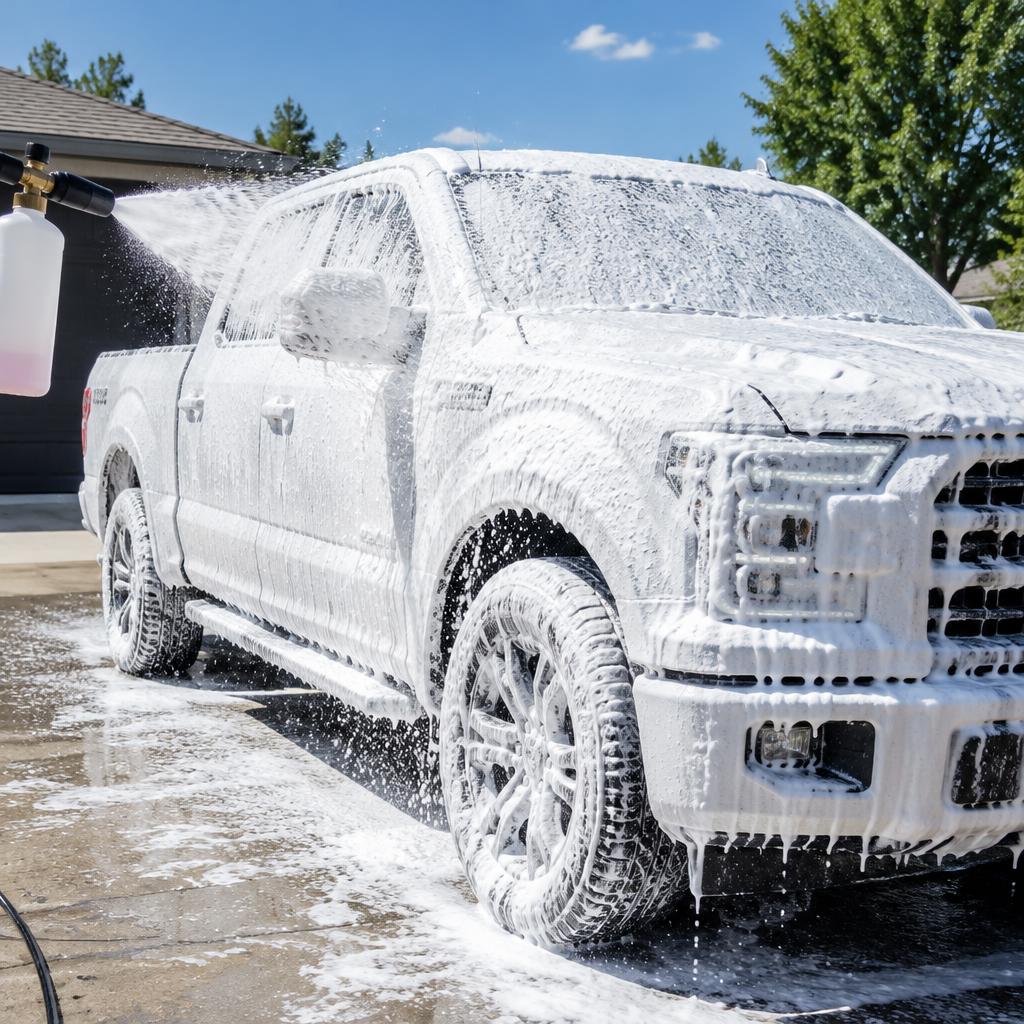
Begin by washing the car in the shade with a pH-neutral shampoo to remove surface dirt. Then apply a dedicated water spot remover according to the label, or a mix of distilled water and white vinegar in roughly equal parts, to a cool panel. Let it dwell briefly, agitate lightly with a microfiber towel, and rinse well.
Never let vinegar or acidic products dry on the paint, and don't use them on hot surfaces. Work one panel at a time, and neutralize by rinsing and re-washing. If you have a ceramic coating or sealant, check the product's compatibility first so you don't weaken it.
- Wash and rinse in shade on a cool panel
- Apply spot remover or diluted vinegar to one panel
- Agitate gently with clean microfiber
- Rinse thoroughly and dry immediately
When should I use a clay bar or iron remover?
If the paint still feels rough after a wash, mineral and other bonded contaminants may remain. A clay bar or clay mitt with plenty of lubricant can lift these deposits. An iron remover can dissolve embedded ferrous particles that sometimes accompany water spotting, particularly around wheels and lower panels.
Clay is mildly abrasive, so use light pressure and fresh lubricant, and expect slight marring on soft paints that polishing can refine. After claying, apply wax, sealant, or coating, since the surface is bare.
How do I fix water spots that are etched into the clear coat?
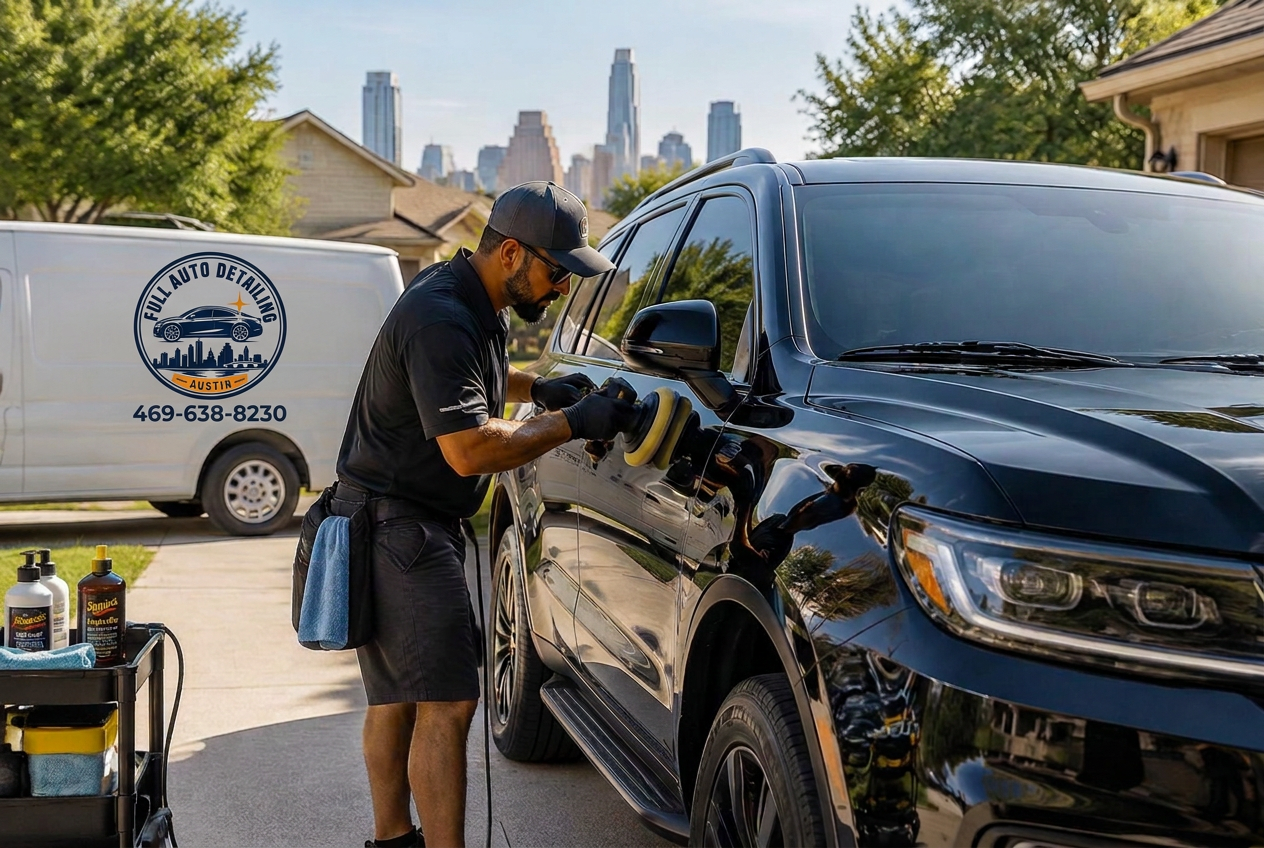
If spots remain after chemical removal and claying, they have probably etched. The fix is to level the surface by polishing with a dual-action polisher, a finishing or medium-cut pad, and a suitable compound. A paint depth gauge helps ensure there's enough clear coat to safely polish, especially on older or previously corrected paint.
Severe etching may not fully disappear without removing too much paint. That's where professional paint correction makes sense: a detailer can test a section, judge how deep the damage is, and set realistic expectations before proceeding.
How do I prevent hard water spots in Austin?
Dry the car right after washing using a clean microfiber drying towel or forced air, and avoid washing in direct sun. Keep the car away from sprinkler overspray, and re-park if you see sprinklers pointed at the driveway. A drying aid can lubricate the surface and reduce spots.
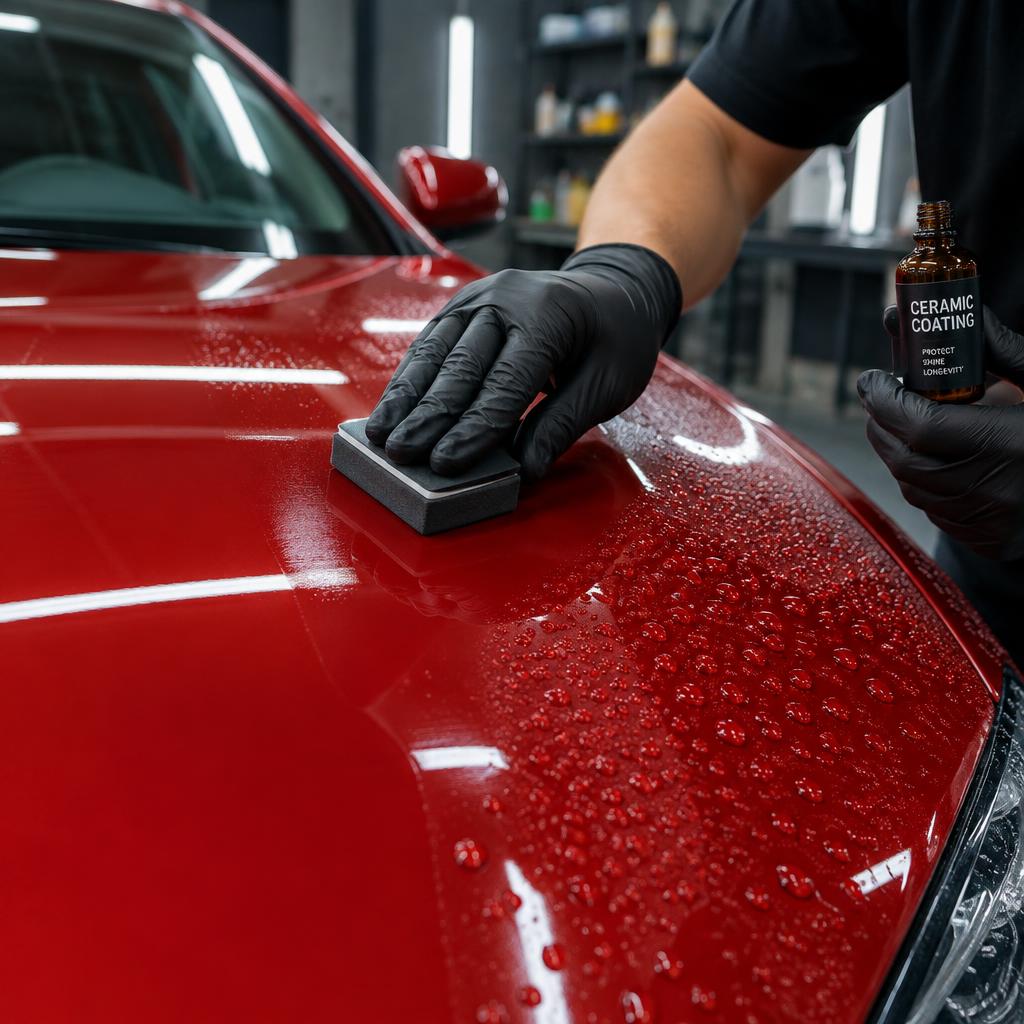
A ceramic coating or good sealant makes water bead and slide off, reducing how much sits on the paint, though it doesn't make the car spot-proof. For help, call Full Auto Detailing Austin at 469-638-8230 for correction and protection.
Frequently asked questions
Does vinegar damage car paint?
Diluted vinegar is generally safe if used briefly and rinsed, but it should never dry on paint or be used on hot panels.
Can water spots permanently damage paint?
Yes, if left long enough they can etch into the clear coat and require polishing.
Will a pressure washer remove them?
Usually not, since the minerals are bonded to the surface.
Do water spots affect glass too?
Yes, and glass often needs a dedicated glass polish or spot remover.
Can ceramic coating prevent them?
It reduces them and makes them easier to remove, but cannot fully prevent them.
Topics covered: Edwards Aquifer · clear coat · clay bar · iron remover · dual-action polisher · paint depth gauge · pH-neutral shampoo · ceramic coating